
Soothing The Nervous System
Why Breathing
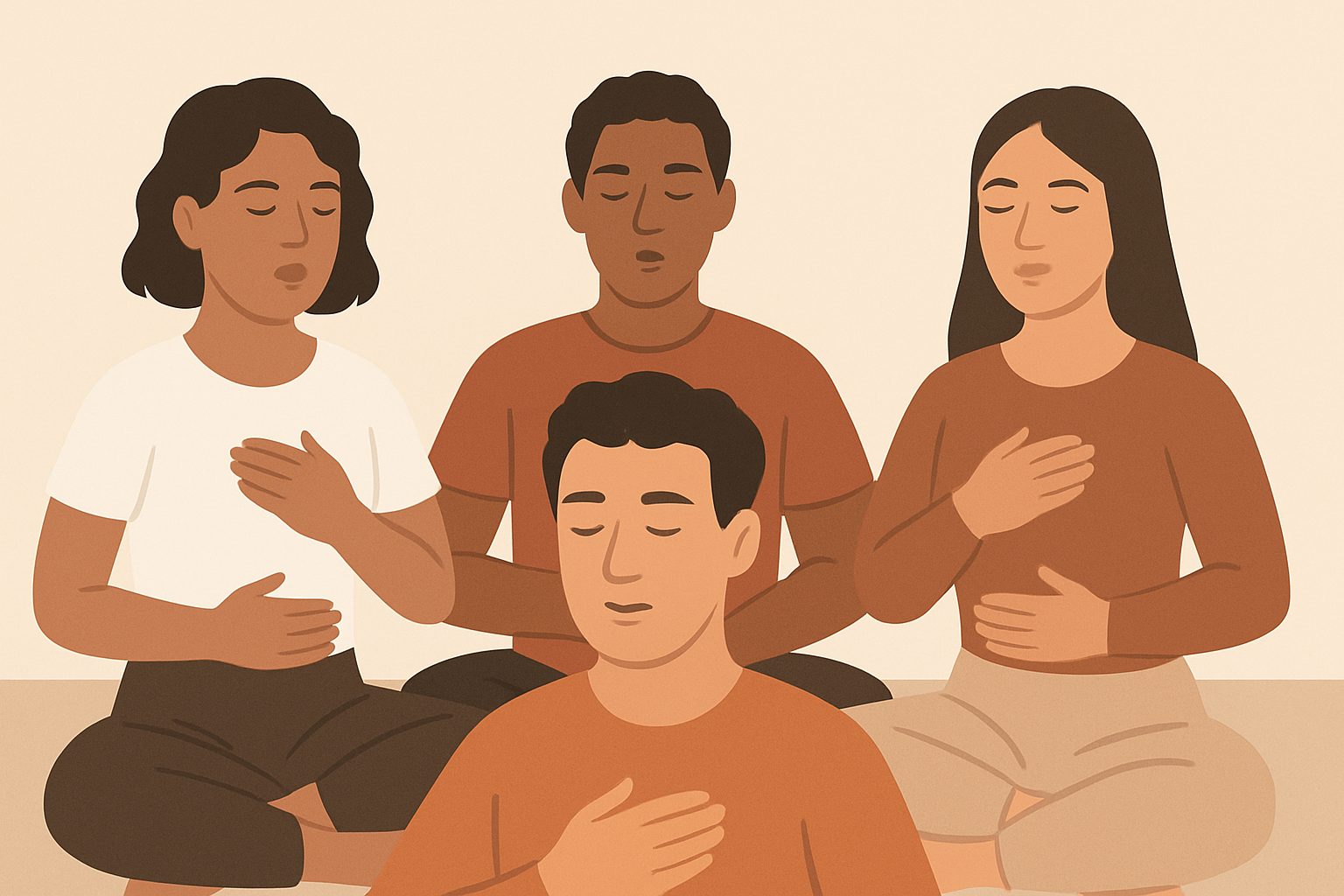
Breath is one of the most powerful and accessible tools we have to teach the brain that we are safe. It helps activate the parasympathetic nervous system, the part of our body that supports rest, recovery, and healing. Slowing and deepening the breath can lower cortisol levels, increase oxygen flow, relax tense muscles, improve sleep, enhance focus, and most importantly, reinforce a sense of safety. While many breathing techniques are designed to calm the nervous system, some can also be used to gently activate it, especially helpful when we feel stuck, frozen, or low on energy. Below are several techniques to explore. Try the ones that resonate most with you.
Physiological Sigh
The physiological sigh is a natural, science-backed breathing technique that helps quickly calm the nervous system and reduce stress or anxiety. It involves taking two quick inhales through the nose, followed by a long, slow exhale through the mouth.
Inhale deeply through your nose.
Take a second, shorter inhale on top of the first (also through your nose).
Exhale slowly and fully through your mouth, like a gentle sigh.
Repeat for 1–5 rounds.
This pattern mimics how the body naturally resets itself during stress, sleep, or crying. The double inhale helps fully inflate the lungs and open collapsed air sacs, while the long exhale signals the brain to relax. Research has shown that just 1–3 rounds of physiological sighing can lower heart rate, reduce cortisol levels, and help bring the body out of fight-or-flight mode. It’s simple, quick, and can be used anytime you need to reset your system—especially during pain flares, anxiety spikes, or overwhelm.
VU Breath
The VU breath is a calming yogic breathing technique that uses sound and vibration to support nervous system regulation and internal focus. It’s commonly used in somatic and trauma-informed practices to promote grounding and a sense of safety.
How to Do the VU Breath:
Sit or lie down in a relaxed, comfortable position with your spine straight.
Take a slow, deep inhale through your nose, filling your belly and chest.
As you exhale slowly through your mouth, make a deep, resonant “Vuuuuuuuuu” sound — similar to the sound "voo" but longer and more drawn out.
Feel the vibration in your chest and belly as you exhale. The sound should be soft, low-pitched, and sustained until your breath is fully released.
Pause briefly, then repeat for 3–5 rounds, or more if desired.
Tip:
Let the sound come from deep in your belly or chest, not your throat. The goal is to feel the vibration internally, which helps activate the vagus nerve, calming the body and signaling safety to the brain.
This breath can be especially helpful during moments of anxiety, dissociation, or emotional overwhelm.
4,7,8 Breathing
4-7-8 Breathing is a simple, structured breathing technique designed to calm the nervous system and promote relaxation. It was popularized by Dr. Andrew Weil and is rooted in yogic pranayama practices.
How to Do 4-7-8 Breathing:
Inhale through your nose for 4 seconds
Hold your breath for 7 seconds
Exhale slowly through your mouth for 8 seconds
Repeat the cycle for 4 rounds, gradually increasing as you get more comfortable
Tip: Place the tip of your tongue behind your upper front teeth during the practice and keep it there throughout the exhale.
box breathing
Box breathing, also known as square breathing, is a simple and effective technique used to reduce stress, improve focus, and calm the nervous system. It's called "box" breathing because each part of the breath cycle is equal in length, like the four sides of a square.
How to Do Box Breathing:
Inhale slowly through your nose for 4 seconds
Hold your breath for 4 seconds
Exhale slowly through your mouth for 4 seconds
Hold your breath again for 4 seconds
Repeat the cycle for several minutes, typically 4–6 rounds
You can visualize drawing a square in your mind as you breathe—each side representing one part of the breath cycle. Box breathing is especially helpful in high-stress situations or before sleep, as it promotes a sense of calm, steadiness, and control.
Lion’s Breath
Lion’s Breath (Simhasana) is a powerful yogic breathing technique used to release tension, boost energy, and stimulate the throat and face. It’s expressive, playful, and often leaves you feeling both invigorated and relaxed.
How to Do Lion’s Breath:
Sit comfortably on your heels or cross-legged, with your spine tall.
Place your hands on your knees or thighs, spreading your fingers wide like lion claws.
Inhale deeply through your nose, filling your lungs completely.
As you exhale forcefully through your mouth, open your eyes wide, stick your tongue out as far as you can (toward your chin), and make a strong “haaaa” sound from deep in your throat.
Relax and return to normal breathing, then repeat for 3–5 rounds.
This breath is great for releasing inner tension, activating the vagus nerve, and inviting a sense of playful release. It's often used in yoga to awaken energy and clear emotional or physical blocks—especially around the throat and face.
JOURNAL PROMPT
What breathing techniques resonated with you? Which ones do you plan to integrate this week?