

Module 3: Pain Education
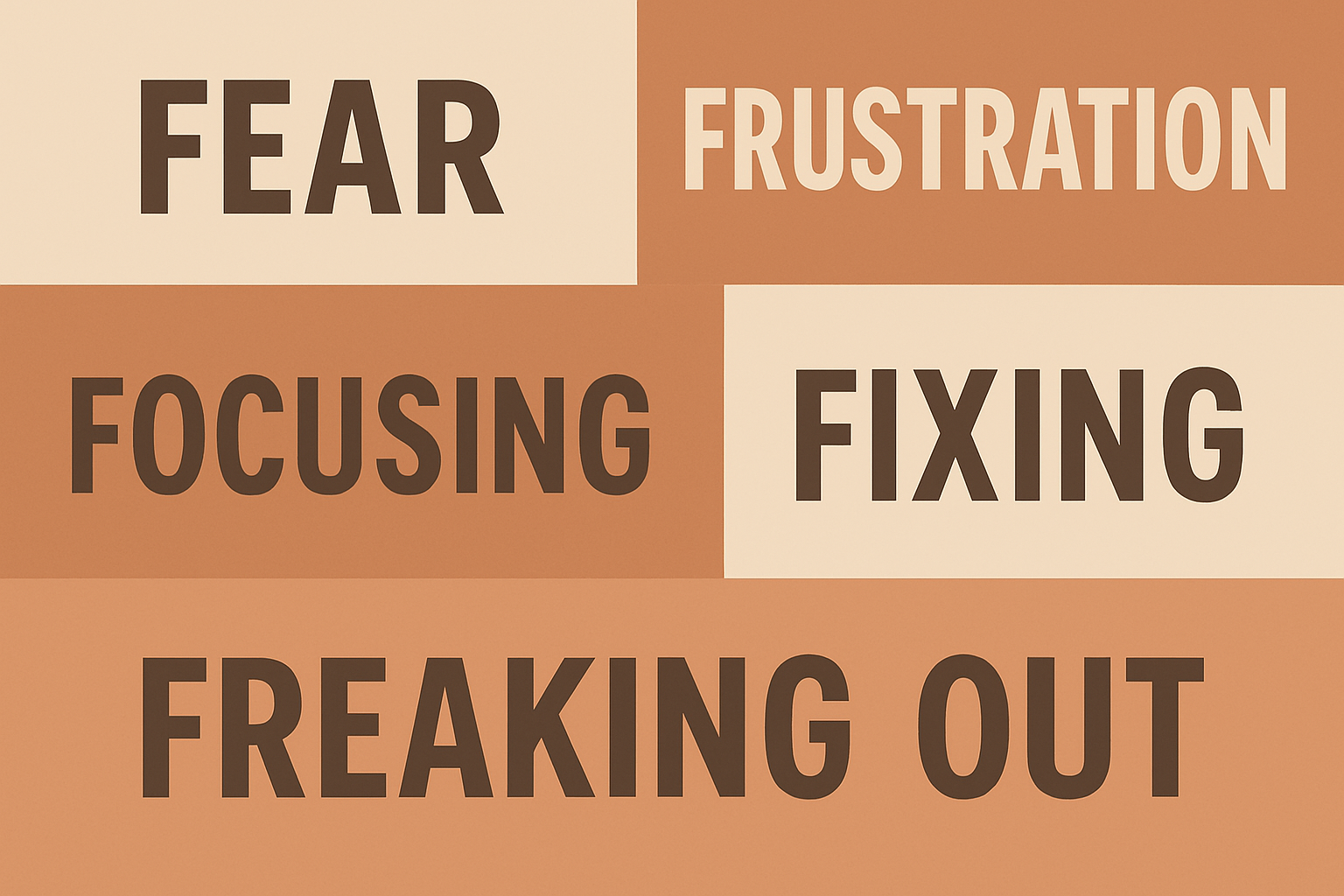
Avoid the Five F’s
In Pain Reprocessing Therapy, we pay close attention to how we respond to pain, because our responses can either calm the nervous system or reinforce a sense of threat. One common pattern that fuels chronic pain is falling into what we call the “Five F’s”: Fear, Frustration, Focusing on the pain, Trying to Fix it, and Freaking out. While these responses are completely understandable, especially when pain is intense or unpredictable, they can actually strengthen the pain-fear pathway in the brain.
When we react with fear or urgency, the brain interprets pain as dangerous or life-threatening, which increases the alarm signals in the nervous system. Focusing too closely on pain or constantly trying to fix it can also keep the brain in a state of hyper-vigilance. Over time, these reactions tell the brain that the pain is a problem that needs to be solved right now, reinforcing the idea that we are not safe.
That’s why the way we respond to our pain matters. Our goal in PRT is to begin shifting out of those automatic fear-based reactions and respond instead with calm, curiosity, and self-compassion. This doesn’t mean ignoring the pain, but rather approaching it from a place that says to the brain, “I’m okay. I can handle this. I am safe.”
This shift takes time and patience. Many of us have spent years, even decades responding to pain with fear and urgency, and those responses have become automatic. The first step is building awareness of when we’re falling into the Five F’s. From there, we can begin to practice responding differently: by soothing ourselves, reminding ourselves that pain does not equal harm, and offering a supportive internal dialogue rather than panic or judgment.
Over time, this new response helps the brain rewire its patterns and feel less threatened. And when the brain feels safe, pain begins to quiet down.
JOURNAL PROMPT
Which of the Five F’s stood out the most?