

Sleep
Sleep Education
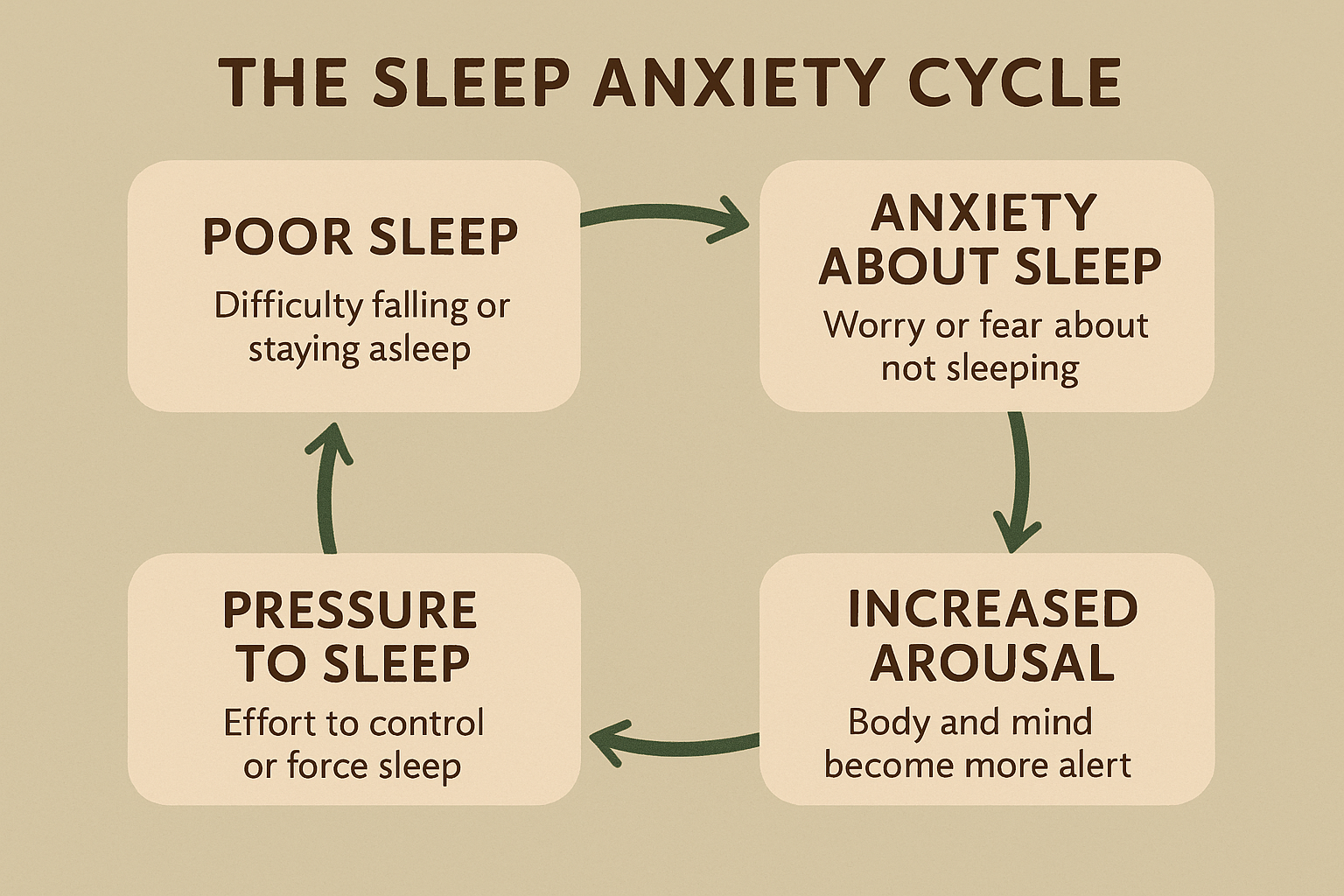
Just as our understanding of pain has evolved, so has our understanding of sleep. We now know that the pressure we place on ourselves to get "perfect" sleep, worrying about how many hours we get or fearing the effects of a poor night’s rest, can actually activate the nervous system and increase anxiety around sleep. This stress response can make falling asleep even harder, creating a cycle where fear of not sleeping becomes the very thing that keeps us awake. Poor sleep and chronic pain often reinforce each other as well: lack of sleep heightens pain sensitivity, and increased pain makes it harder to rest, leading to even more worry. Over time, this pattern can create what’s known as the sleep anxiety cycle, where the brain becomes more alert at night and the bed starts to feel like a place of stress rather than comfort. The goal of this module is to provide tools and insights to help you break that cycle and reconnect with sleep in a more supportive way.
Changing Our Relationship With Sleep
Breaking the cycle begins by letting go of the pressure we put on ourselves to sleep a certain way. The more pressure we apply, the more the brain starts to associate sleep with danger instead of safety. Rather than focusing on what's wrong with your sleep, try shifting your attention to what you like about rest, whether it's the warmth of your blanket, the quiet of the night, or simply lying still. This helps teach the brain that sleep is a safe and pleasant experience. Another powerful shift is changing the language we use. Instead of saying “I suffer from insomnia,” try saying “Insomnia is something I experience.” This small change reinforces the idea that your sleep struggles are not fixed or permanent, and that change is possible.