
Emotions
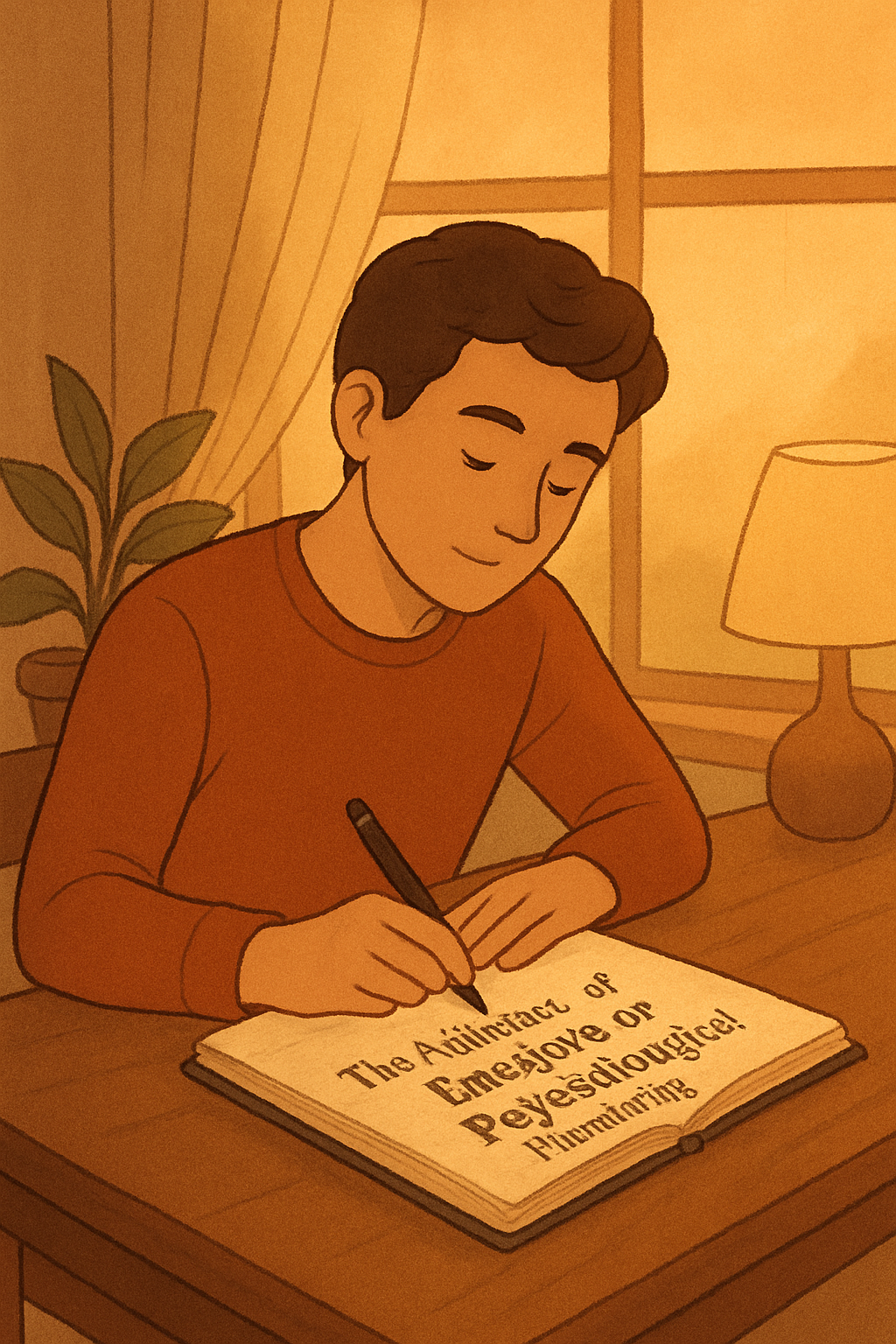
Journaling for emotions
Journaling benefits emotional health for scientifically supported reasons. Writing about emotions engages the brain’s prefrontal cortex, the area responsible for reasoning and self-regulation, which helps calm activity in the amygdala, the brain’s fear and threat center. This process, sometimes called “affect labeling,” has been shown in brain imaging studies to reduce the intensity of emotional responses. Journaling also activates the hippocampus, which supports memory integration and meaning-making, allowing you to place experiences into a coherent narrative rather than experiencing them as chaotic or overwhelming. Regularly reflecting in writing can strengthen neural pathways for emotional regulation, lower cortisol levels linked to stress, and improve immune function. By repeatedly processing emotions through language, the brain learns to view them as safe, temporary experiences rather than ongoing threats, which supports both mental and physical well-being.
There are many techniques but bellow are foiur techniques to help you get started!
Expressive Writing
Expressive writing is a therapeutic practice where you write openly and honestly about your deepest thoughts and feelings related to an emotional challenge, stressful event, or personal struggle. It is based on research showing that putting emotions into words can help regulate the nervous system, reduce stress, improve mood, and even support physical health. This also gives our thoughts a place to live so that they do not have to ruminate in our minds, helping activate the rational part of our brain. The focus is on authenticity rather than grammar, spelling, or style, what matters is expressing yourself fully. Try this practice for 15-20 min a day and see what you notice!
Easy steps to practice expressive writing:
Set aside time and space – Choose a quiet place where you will not be interrupted.
Pick a focus – Think of a stressful, emotional, or meaningful experience that you are ready to explore.
Write freely – Put your thoughts and feelings on paper without worrying about structure, spelling, or punctuation. Let it be raw and uncensored. Write for 15-20 min.
Stop when time is up – When you finish, take a few breaths and notice how you feel physically and emotionally.
Discard- This step is option, if you find it helpful to release the emotions discard the note by tearing it up, crumbling it, burning it or any way that best feels most representative of letting it go.
Repeat as needed – Many people find benefit from doing this for 3–4 consecutive days, but you can adapt it to your needs
Captured Moments
A captured moment is the practice of recording a specific event, feeling, or experience in rich detail so it’s preserved in your own words. Instead of summarizing an entire day, you focus on one small slice of time, like taking a mental photograph with words. The aim is to write so vividly that, when revisited later, you can step back into that exact experience. This can help you reawaken positive emotions and, in turn, recreate the beneficial physiological responses associated with that moment.
Try selecting moments that stand out, whether positive or challenging. These could be events, conversations, or even fleeting impressions.
Re-experience the moment in depth. Focus on imagery, sensations, feelings and qualities. Be as descriptive as you can. Write about your experience using lots of adverbs and adjectives and metaphors. Explore the lessons it holds for you.
What do you remember most about it? How did it touch you? What qualities of life did you experience?
You can also select a painful or difficult event to help feel the experience instead of letting it ruminate from a place of not judging it.